For many – or, rather, for almost everyone – the problem is not, at this point, the “if”, but the “when”. With the proclaimed and almost universal belief that, in any case, this “when” is now just around the corner. A matter of days, a few weeks, maybe. Or, at worst, a handful of months. Sixty-seven years after the triumphant entry of the “barbudos” into Havana, the Castro revolution has finally reached its end. And, for sure, it won’t see the dawn of 2027.
These days, this is the refrain of the song – a song that only lacks the last verse – whose notes keep resonating, with a few and very faint exceptions, throughout the entire media universe. Cuba is in its last throes. Cuba is in a dead-end alley. Cuba is a besieged fortress with only two possible ways out: to negotiate, without any power of exchange, the terms of its surrender, or to die of starvation. All clear. All written down. Everything is already settled. Everything but the closing of the circle, the classic light at the end of the tunnel. A “light” that, at the moment, is actually just a dark, impenetrably dark spot.
The premises of this foretold (but not yet happened) fall are more than known. Since President Nicolás Maduro was militarily kidnapped, Venezuela has been, in a very “oily” harmony with what remains of the old Chavista government, under the full (though remote) control of the United States of America (“We’re running Venezuela,”, Donald Trump and his Secretary of State, Marco Rubio, like to repeat) and all Venezuelan oil supplies to Cuba have been cut off. Cuba is in the dark. And in the dark it is destined to remain because Donald Trump has, in recent days, further tightened the noose around the dying man’s neck, mobilizing his gunboats in the Caribbean and waving his favorite truncheon – highest tariffs – in front of any other state (Mexico in the front row) that dares to send energy resources of any kind to Havana.
The technique used is the ancient one of the coup de grace
The technique used is the ancient one of the coup de grace. Inflicted, in this case, not with the classic gunshot to the back of the head, but by asphyxiation. And it is certainly a fact that, from day to day, in Cuba, breathing is becoming more and more difficult, or almost impossible.
Just yesterday, the government informed local airlines that it was no longer able to refuel jets landing at any of the island’s airports. Tourism – since many years now, the country’s primary source of income – has been effectively paralyzed. A few thousand lost souls which – according to unofficial, but more than credible calculations – have now been strategically concentrated in just four hotels, the only ones still able to guarantee services at an acceptable level. The streets of Havana appear deserted. Hospitals – pearls of a healthcare system once proudly flaunted as one of the revolution’s great successes-function at a minimum like, for that matter, nearly all public services. And this minimum is getting, from hour to hour, dangerously close to zero.
Cuba appears, in these hours, immersed in a surreal calm. The classic calm, according to many, that precedes the storm. Or, more likely, the calm that slowly marks the times of a resigned expectation of the worst. Empty squares, no protests. Silence and queues (silent queues) in a country where, for decades now, queuing has consumed much of its daily life. And it is with apparent calm that the government of Miguel Díaz-Canel, the pale heir to the Castro dynasty’s charisma, has responded to this siege so far.
Díaz-Canel did so by announcing drastic economic countermeasures that, faced with the enormity of the crisis, actually seem nothing more than palliative, or preventive alibis, in the face of a foretold catastrophe. Reduction of working hours and school hours. Public transport all but cancelled. All decisions, in fact, that look like nothing more than the implicit (but very easily readable) prelude to a pure subsistence economy just down the road. Soon, Díaz-Canel said, “it will be necessary to meet the population’s food needs using local production.”

The President of the Republic of Cuba again insisted on principles – today presented by many media outlet as the “unprecedented” premise of an unconditional surrender – that Cuba is practically always maintained in front of the “powerful neighbor to the north”. Contrary to what Trump claims to justify his policy of terminal economic asphyxiation, has repeated Diz-Canel, Cuba does not pose any “terrorist” threat to U.S. security. And is therefore more than willing to initiate a dialogue, on egalitarian grounds, mutual respect and political non-interference, on all issues of mutual interest. Fight against terrorism and drug trafficking, international financial crime, immigration, security…
If judged on the surface, these words could resonate in anodyne contrast with the desperate reality of the landscape. And – as almost all analysts seem to believe – perhaps they really are, as death by starvation is nearing, just a first step towards an inevitable fall. Anything can be. Everything is a “maybe” in this Cuba that, with Trump’s garrote around its neck, is walking towards the abyss.
And yet one thing is certain: in their apparent calmness, those words recall at least a couple of historical truths. And they suggest to postpone – or at least suspend until further notice – the writing of an obituary of any sort.
A never ending siege
The first truth is, of course, this. It is not the first time (nor the second, nor the third time) that the Cuban revolution has been written off. The state of siege – with the related announcement of an imminent death – has indeed been, since the first cries of Castroism, an integral, essential part of a history that, today ended in a dead rail as documented in the chronicles, has given Cuba dignity and misery, freedom and oppression, glory and shame. It is impossible to understand the history of Castroism (and its Soviet-totalitarian drift) by separating it from that of the “embargo,” an original act of prepotence that, now obsolete and ridiculous, nevertheless remains the ferocious expression of an imperial desire for revenge.
It was certainly not “only” due to the embargo that, against its own premises (read, in this regard, the very famous “La Historia me absolverà”, the speech Castro gave in his defense during the trial for his armed attack on the Cuartel Moncada, in July 1953), Castroism became a dictatorship. But what is certain is that dictatorship and embargo have always been – one as fuel for the other, cause and at the same time effect – inseparable parts of a single story. And of a story that, on the Cuban side, has been – and continues to be – above all a story of survival.
After all, the Cuban revolution had already been dismissed as moribund in early 1961, when, after the new government’s first reforms and expropriations, almost everybody assumed that the US would invade (directly or by proxy). Invasion that punctually arrived (April 1961, Bahía Cochinos), but only to be defeated in what, despite all that followed, remains a milestone in the history of anti-imperialism in Latin America.
And Cuba was again proclaimed inesorably doomed at the end of 1962 when, in response to that defeat – and, even more, to the famous “missile crisis” which, in October of that year, had brought the world to the brink of atomic war – John Fitzgerald Kennedy issued the “Proclamation 3447” that of the embargo was, in effect, the birth certificate and also the final point of consolidation of the “sovietization” of the revolution.
This revolution – which, as Berlinguer said, had long since exhausted all “spinta propulsiva” – had been considered dead again in the early 1990s, with the dissolution of the Soviet Union and of the entire trade net that, largely in terms of assistance, had been the Cuba’s economic reference system. A shock that, between 1992 and 1995, had caused GDP to fall by 50%. And that it had also been the cause, in 1994, of a series of popular protests (the famous “maleconazo” in August) and of a massive (and favored by the government) wave of migration on boats of fortune. Survival assumed, on that occasion, a name of capture that became the “title” of an extreme form of austerity, which in turn – in confirmation of the intrinsic contradiction of the Cuban way – a permanent way of living: “Special Period in Time of Peace.” So it was named by Fidel Castro. That period has lasted, high and low, until today. Special and, at the same time, absolutely, desperately normal. As normal as everyday life. Normal as the systematic repression of all forms of dissent.
It was in this condition of desperate normality that Cuba faced another moment of “death foretold.” It happened between 2006 and 2008, when, first because he was seriously ill and then because of a forced transition to the “plan pijama,” the pyjama program, as the retirement of high-ranking executives is sarcastically called in popular jargon – Fidel Castro abandoned the baton of a command that had, until then, been absolute, indisputable, and unchallenged. Sacredly unchallenged. To the point that, until then, all the “new leaders” who – like Icarus with the Sun – had come too close to his throne had been burned and overthrown by him, for the most varied reasons.
The three pillars of revolution
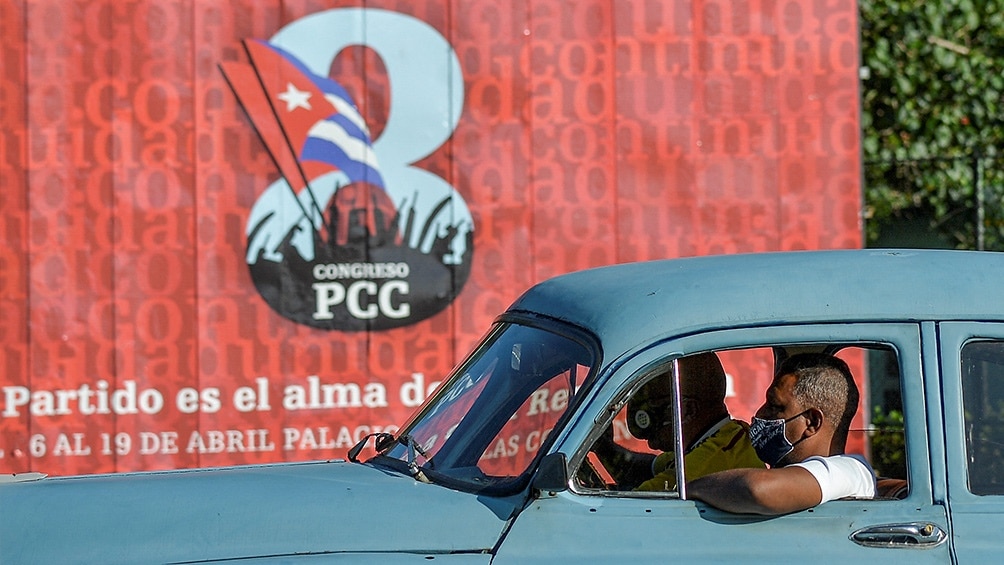
Cuba, the best analysts explained at the time, survived the lack of generational renewal and the absence (barely attenuated by periodic and rather scanty “reflections” on the Granma) of its great and hieratic leader, for a simple reason. Because – beyond the essential charisma of its founder – the Revolution (or that of the revolution remained) was based on three pillars that, although fueled by this charisma, enjoyed a life and strength of their own: the Communist Party, that is, the one that even today, despite the “liberal” reform of 2019, the Constitution defines as the “higher ruling force of society and the State”. The Armed Forces, with all those connected – police, secret services – instruments of repression. And, finally, the apparatus of control-consensus (the Committees for the Defense of the Revolution, the trade unions, the various trade associations) that for decades have represented Cuban civil society (or that, like many argue, have prevented the development of a true and free civil society).
And precisely this, in the face of the “coup de grace” underway, is the real question today. Are these three pillars still standing? Many seem convinced that they are not. And that it is precisely in this now complete dissolution of those pillars that the terminal nature of the crisis lies. The fall – as the refrain goes – is at this point absolutely inevitable.
Fall by what ways? And in the direction of what? Here everything vanishes into darkness. Cuba’s future is, today, a huge question mark. But ancient truths continue to flow from the past, and even though they do not offer a definitive answer regarding what will be, are indispensable for understanding what was and what continues to be.
A fact first. Cuba has never been, for the United States of America, a country like any other. Since the days of the Declaration of Independence, it has been the true and most immediate unit of measurement of its imperial ambitions as an emerging continental power. Thomas Jefferson, Benjamin Franklin, and John Adams had already discussed a possible, indeed, “inevitable” annexation of Cuba. And it is in fact in Cuba that, at the dawn of the 20th century, US imperialism experienced its true baptism when, in a simulation of military aid to the anti-Spanish insurrection, it effectively stole the victory that Cuban patriots had already achieved, at the end of a more than thirty-year and bloody struggle.
Cuba wanted to be a free and independent nation. Instead, it became, thanks to that “generous” intervention, a classic protectorate with a “democratic” Constitution, that, through the infamous “Platt Amendment” – gave to the USA an absolute right of intervention, political or military, depending on the circumstances, in the internal affairs of the new Nation. And it was in this protectorate that, like in a laboratory, the United States have since then experimented, one after another, with all possible variations of imperialist practice. Armed interventions, military occupations, “nation building” and “regime change,” constitutional impositions and the appointment of puppet presidents, the organization of paramilitary formations, economic penetration and domination (in 1959, more than half of the Cuban economy was in the hands of American corporations), cultural subjugation, and the imposition, in the form of blackmail-diplomacy, of permanent treaties (see the still active military base in Guantanamo). And then, after ’59, trade sanctions, clandestine operations, terrorism, radio propaganda, assassination attempts (several dozen the ones documented against Fidel Castro)…
Today, starting from what has happened-and continues to happen-in Venezuela, many wonder who, given the imminent and, indeed, inevitable fall of the regime, might be the Delcy Rodríguez of the situation. That is: which of the representatives of the current regime can become the “hombre nuevo”. Not, obviously in the sense that, in the heroic years, Che Guevara attributed to the term, but in that of guarantor of a transition in the direction imposed by those who, while Cuba is with the rope around its neck, is operating the lever of the gallows.
And a couple of names have come on the basis that actually appear rather fragile and vague. That of Alejandro Castro Espín, Raúl’s son, who years ago rose to the position of head of Cuban intelligence and then mysteriously vanished into thin air, only to reappear, even more mysteriously, just these days at President Díaz-Canel’s side. And, again, that of Oscar Pérez Oliva Fraga – also part of the old royal family, being the nephew of Angela Castro, the eldest of Fidel and Raúl’s sisters – current Minister of Foreign Trade, as well as manager of GAESA, the powerful tourism company owned by the Armed Forces. A detail, this one, that has prompted some to speculate – mindful of Trump’s macabre fantasies about the Gaza Riviera – on possible agreements for the proliferation of Trump Luxury Beach Resorts along the white beaches of the Cuban Caribe.

Nonsense? We’ll see. There are, nonetheless, two sure things. The first: Cuba is not Venezuela. And, beyond any fantasies about Trump Beach Resorts, it has nothing- oil or other precious goods – that can satiate, in a quid pro quo logic, the appetites of the imperial dragon. Nothing, of course, except its own death by suffocation. And this is precisely what, in a very recent statement, the Cuban bishops forcefully emphasized. Nothing good, nothing human – they wrote in essence – can arise from a policy founded on blackmail and increasing the suffering of people. Cruelty doesn’t pay.
The second: if, as almost everyone predicts, the experience of the Cuban revolution were to definitively end, there would be no “liberation” beyond the finishing line. Because what is floating in the air these days is not the scent of a newfound democracy, but the rancid stench of the most classic and outworn colonialism. The definitive fall of Castroism doesn’t mean the reaffirmation of a Cuban national identity, but, as already between 1898 and 1902, its colonial destruction. A good reason for reflection, this, for those on the right who attribute an essential value to national identity.
The “Donroe Doctrine”
That is what History tells us. And, without any possibility of misunderstanding, this is what the news confirms. It’s enough to listen to reports from Minneapolis or, even better, read what Donald Trump himself states in the documents, which are only a couple of months old, that define his new “National Security Strategy.” Or what was promptly renamed “Donroe Doctrine.” “Don” like Donald and “Roe” like James Monroe, the fifth president of the United States who, first, in 1823, theorized the hegemonic rights of the USA over the entire American continent.
The U.S. that is strangling Cuba is not a country that is “exporting democracy” (with all the ambiguities and horrors that this term has historically dragged on). It is, on the contrary, an America that, after a quarter of a millennium, is systematically destroying democracy in its own home and in everything that goes under the name of the “West”.
Whatever one may think of the Castro revolution – of its successes or failures, of its true nature, of its merits, of its crimes or betrayals – its death represents today, because of the timing and manner of its arrival, a defeat for anyone who still believes in the rights of peoples. It is more than ever worth it – not out of nostalgia or faith, but out of democratic necessity, and not just on the left – to return today to shouting, as in the old good times: Cuba yes, Yankee no.